
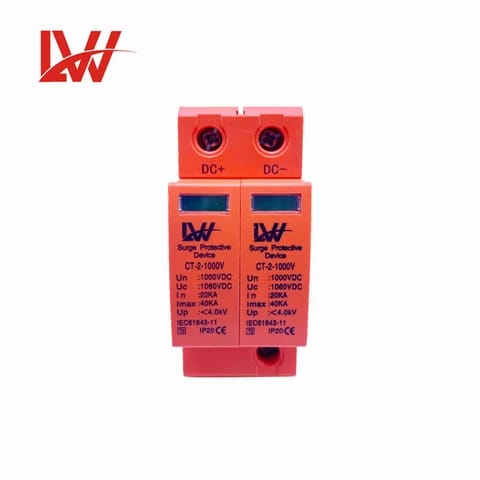
Description
Using a DC circuit breaker for a solar application is not only a good idea but a critical safety requirement. Solar panels produce direct current (DC), and AC circuit breakers are not designed to handle the unique characteristics of a DC electrical arc. A DC circuit breaker is specifically engineered to interrupt the continuous flow of DC and safely extinguish the arc, preventing fires and protecting your equipment.
Here’s a breakdown of what you need to know about DC circuit breakers for solar applications:
Why DC Circuit Breakers are Essential for Solar
Arc Suppression: Unlike alternating current (AC), which has natural zero-crossing points, DC flows in a constant, single direction. When you break a DC circuit under load, it creates a persistent, powerful arc that can be difficult to extinguish. DC breakers are equipped with special mechanisms, like magnetic “blowouts” and arc chutes, to rapidly cool and dissipate this arc.
Protection: They provide protection against:
Over current: When the current exceeds the breaker’s rated value.
Short Circuits: A sudden, large flow of current due to a fault.
Reverse Current: In some systems (like battery storage), fault current can flow in the reverse direction. Non-polarized DC breakers are designed to handle this.


